Award-winning research: CCAI at BritCHI 2026

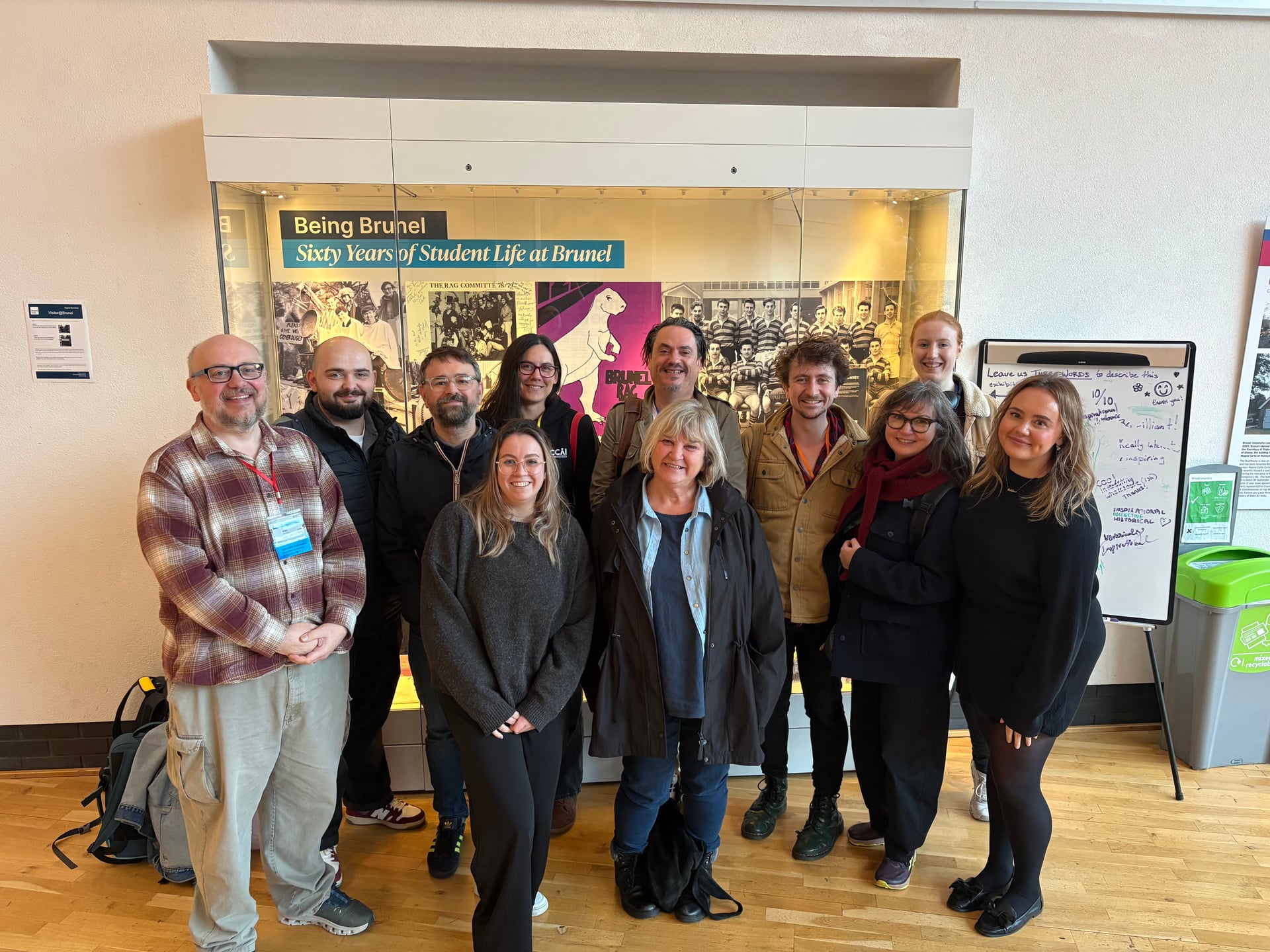
Researchers from the Centre for Citizen-Centred AI (CCAI) enjoyed a fantastic three days at BritCHI 2026, sharing their work, making new connections and celebrating an Honourable Mention award.
Held at Brunel University of London from 1–3 November, this year’s conference, Digital Bridges, brought together researchers, academics and industry professionals working across human-computer interaction (HCI).
With a programme of workshops, research presentations, interactive demonstrations and networking opportunities, BritCHI provided a great opportunity for our researchers to share their work with new audiences and learn from others working across the field.
CCAI was represented throughout the three days, with contributions exploring personhood and communication, our relationships with AI, and children’s experiences of digital money.
Exploring personhood, communication and AI with Amy
The conference began on Sunday with a programme of workshops, including AI Beyond the Individual, led by CCAI researcher  Amy McCerery alongside fellow researchers.
The workshop explored what happens to a person’s identity and personhood when they experience changes in their ability to communicate, and how AI might help or hinder their ability to express themselves.
For someone who has experienced a stroke or another condition affecting communication, losing the ability to express themselves should not mean losing their personhood. The workshop encouraged participants to consider how technology might support people in these circumstances, while also recognising the risks it could introduce.
The session began with discussion cards, getting participants talking about their understanding of identity and personhood. They then explored scenarios submitted ahead of the workshop, considering questions such as when AI might help or harm, whose voices might be missing and how technology could better recognise the relationships and experiences that shape who we are.
Participants worked together to map their ideas, bringing different perspectives and experiences into the discussion.
Supported by her supervisor,  Jayne Wallace, Amy welcomed contributions from researchers and professionals across different universities and industries.
It was a fantastic opportunity for Amy to bring her research to a new audience, build connections and gather ideas that will help shape the next stages of her work.
Getting people thinking differently about AI with Yve Smith
Monday brought something a little different, with CCAI researcher  Yve Smith presenting as part of alt.BritCHI, a track dedicated to unconventional, experimental and thought-provoking approaches to human-computer interaction.
Yve presented her research during the Between the Cracks session, chaired by CCAI Principal Investigator  Shaun Lawson and Mafalda Gamboa, encouraging audiences to question some of the assumptions we make about AI.
Her work explored how speculative disclaimers might encourage people to think more critically about large language models (LLMs), challenging the ways we understand and interact with these increasingly familiar technologies.
The conversation continued into the evening, when Yve delivered an interactive demonstration inviting conference attendees to create their own AI disclaimers.
Participants came up with some brilliantly creative responses, including warnings that AI might refuse to do things for you or might be too quick to agree with everything you say.
It was a fun and engaging way to encourage people to think critically about AI, showing how humour, creativity and participation can make complex research questions more accessible.
Challenging conversations with AI-enabled teddy bears
CCAI Co-Investigator  Professor Pam Briggs also contributed to the conference, presenting
 Ted-AI Talks: Challenging Chats with AI-Enabled Teddies, co-authored with
 Dr Matt Tatwood ,
 Dan Jackson and
 Professor Kyle Montague.
The research explored whether AI-enabled teddy bears expressing different perspectives could encourage people to question information, consider alternative viewpoints and think more critically when making decisions.
The team invited conference attendees to take part in the Ted-AI Bear’s Picnic, an interactive demonstration where participants could experience the concept for themselves.
Using a playful and familiar format, the demonstration raised some important questions about how AI systems influence our thinking and whether technology designed to challenge us, rather than simply agree with us, could support more thoughtful decision-making.
Understanding children’s digital money with Caroline McKinley and Chris Elsdon
On Tuesday, CCAI researcher  Caroline McKinley presented her paper, Children and Their Digital Monies: Expert Perspectives and HCI Opportunities, alongside Chris Elsdon during the conference’s Digital Health, Care and Wellbeing paper session.
Their research explores how children experience and understand digital money, drawing on expert perspectives to identify opportunities for future human-computer interaction research.
As payments, savings and financial interactions increasingly move into digital spaces, children are growing up with experiences of money that can look very different from those of previous generations.
The paper considers what these changes mean for children and how technology might better support their understanding of and engagement with money.
And the final afternoon brought some fantastic news!
During the conference’s closing awards ceremony, Caroline and Chris’s paper received an Honourable Mention, recognising the quality and contribution of their research.
The paper received excellent feedback from reviewers, with one describing it as:
“An excellent paper, very well written and eminently citable.”
A brilliant achievement for Caroline and Chris, and a wonderful way to finish BritCHI 2026!
A strong Northumbria presence at BritCHI
Alongside CCAI’s contributions, colleagues from across Northumbria University also shared their research at BritCHI, highlighting the breadth of work taking place across the University’s human-computer interaction community.
 Dr Andy Dow presented Mollified by Mundane Machines: GenAI and the rise of Authorship Psychosis and youarenotyou.com, a provocative exploration of generative AI and its potential influence on authorship, identity and how people understand their own thinking.
 Dr Lauren Scott shared From Justice to Care: Envisioning Technology’s Role in Offline Misinformation Correction, exploring how technology might help people respond to misinformation through approaches that prioritise care, support and community understanding.
CCAI-aligned researcher  David Colborn-Clark also presented Talk Before Policy (Mission + Machine: Designing a Values-Led Toolkit for Organisational AI Deliberation), exploring how shared values, discussion and deliberation can help shape more meaningful approaches to AI governance.
Together, these contributions reflected the variety of perspectives and research approaches represented by Northumbria University at the conference.
Making connections beyond the conference
Alongside the presentations, workshops and demonstrations, BritCHI gave our researchers opportunities to meet people from different universities, disciplines and industries.
Conversations throughout the conference provided a chance to exchange ideas, hear different perspectives and introduce CCAI’s research to the wider HCI community.
Attending events such as BritCHI is an important part of supporting our researchers to develop their professional networks, share their work with new audiences and identify opportunities for future collaboration.
We are proud of the contributions made by Amy, Yve and Caroline throughout the conference, and delighted to see Caroline and Chris’s research recognised with an Honourable Mention.
Our thanks go to Mark Perry and Monica Pereira, the BritCHI 2026 General Chairs, and the wider organising team for delivering such an engaging and welcoming event at Brunel University of London.
The conference provided valuable opportunities to share CCAI’s research, strengthen existing connections and establish new relationships across the HCI community, which we look forward to building on in the future.
We’re already looking forward to BritCHI 2027, which is set to take place at Heriot-Watt University, and another opportunity to share our research and reconnect with the HCI community.
Interested in finding out more about our work? Explore the research happening at the Centre for Citizen-Centred AI, discover the people behind our projects and find out how to connect with us at ccai-cdt.ac.uk.
People
 Ella Walters
Publications
-
Children and Their Digital Monies: Expert Perspectives and HCI Opportunities
Caroline McKinley, Valentina Andries, Susan Lechelt, Chris Elsden
2026. Electronic Workshops in Computing. doi:10.14236/ewic/britchi26.22
-
Ted-AI Talks: Challenging Chats with AI-Enabled Teddies
Pam Briggs, Matt Wood, Dan Jackson, Kyle Montague
2026. Electronic Workshops in Computing. doi:10.14236/ewic/britchi26.29
-
Mollified by Mundane Machines: GenAI and the rise of Authorship Psychosis
Andy Dow, David Colborn-Clark, Matthew Pointon
2026. Electronic Workshops in Computing. doi:10.14236/ewic/britchi26.28
-
From Justice to Care: Envisioning Technology’s Role in Offline Misinformation Correction
Lauren Scott, Jamie Mahoney, David Colborn-Clark, Reem Talhouk
2026. Electronic Workshops in Computing. doi:10.14236/ewic/britchi26.61
-
Mission + Machine: Designing a Values-Led Toolkit for Organisational AI Deliberation
Marta E. Cecchinato, David Colborn-Clark, Andy Dow
2026. Electronic Workshops in Computing. doi:10.14236/ewic/britchi26.32