1. Computational foundations of AI
The technical grounding in AI and machine learning that the rest of the programme builds on, whatever your starting discipline.
Training · Four-year PhD
PhD Researchers will experience a valuable and varied research journey. The degree programme aims to ensure that researchers coming from diverse disciplines gain the interdisciplinary skills needed for Citizen-Centred AI over the course of 4 years (or 6.5 years at 60% FTE), supported by two Research Software Engineers working in AI.
At a glance
Researchers join us from many disciplines. The programme gives everyone the interdisciplinary skills Citizen-Centred AI needs, with some training compulsory and the rest chosen to fit the skills you already have.
Training timeline
Select a year, or an activity, to see what it involves.
Select a year, or an activity, to see what it involves.
Work in a cohort to undertake core skills training and conduct group research projects aligned with external partners.
Pursue your independent doctoral research in collaboration with your supervisors and external partners.
Continue your independent research project and extend your experience of working with supervisors, peers and external partners.
Complete your independent research and undertake further career development.
Year One in focus
Your first year is spent with your cohort, building shared foundations one semester at a time.
The technical grounding in AI and machine learning that the rest of the programme builds on, whatever your starting discipline.
Design methods for meaningfully engaging citizens, communities and organisations in how AI is made.
The ethics, regulation and governance shaping how AI is introduced into society.
Alongside these, everyone takes part in group projects — some with the Centre's public, third sector and business partners — bringing in experiential learning from the outset.
Seminar series
A weekly seminar series brings PhD researchers, supervisors and partners together to engage with the continuously evolving AI landscape.
Introducing HCI, Digital Civics and Design theories, concepts and methodologies for meaningfully engaging citizens, communities, organisations and publics in the design, development and evaluation of AI technologies.
A space to explore relevant and emerging topics about AI and its introduction into society, bringing to the fore often-marginalised understandings of AI.
The series includes guest talks by critical and leading voices and researchers, unpacking the complexities at the intersection of AI and society. Some guest talks are open to the public, bringing the wider CDT community, partners and others into these conversations.
Support around you
Supervisors with expertise in your research topic, matched to complement your own skill set.
Two Research Software Engineers working in AI support you throughout your research and learning.
Public, third sector and business partners, through group projects and optional placements.
Meet our partnersA community of researchers from diverse disciplines, starting the journey together.
Training events
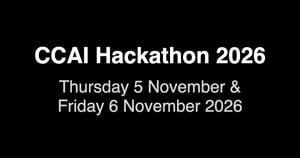


–
Northumbria University’s UKRI AI Centre for Doctoral Training in Citizen-Centred Artificial Intelligence - CCAI Summer School 2026.

–
Northumbria University’s UKRI AI Centre for Doctoral Training in Citizen-Centred Artificial Intelligence - CCAI Summer School 2025.
Details when you need them
No. Foundational training, including AI, is part of the CDT, and each researcher receives a personalised training plan. You do not need a first degree in Computer Science.
No. The Year One training is compulsory; other training is optional, identified based on your individual needs and existing skills.
No, placements are optional. If you would like to take one up, from Year Two onwards you will be supported to undertake a placement at one of the Centre's partner organisations.
The seminar series is for PhD researchers, supervisors and partners, but some guest talks are open to the public — see our events.
Full-time PhD researchers receive 40 days a year and part-time PhD researchers receive 24 days. This includes fixed days for national holidays and the University's Christmas closure.
If you have a disability or long-term health condition, you can apply for Disabled Students' Allowance (DSA) on top of your stipend. DSA helps cover extra support or equipment. If you join us, the team will help you with your application.
Yes, if your employer wants to support research aligned with citizen-centred AI. We will agree the details of the sponsorship with them, including data sharing and intellectual property.
No. Other public funding cannot be transferred into a CCAI studentship.