
Xixiang Nie

 Northumbria University

I hold a BA (Hons) in Graphic Arts from the Winchester School of Art, University of Southampton and an MA in Design Informatics from the Institute for Design Informatics, University of Edinburgh. Therefore, my diverse academic background lies at the intersection of visual art, interaction design, and human-computer interaction.
I also worked as a Research Assistant in Human-Data Interaction at the School of Electronics and Computer Science, University of Southampton, leading to an interdisciplinary project on creative interfaces for IoT data and designing for provocation. I am also an external researcher in the “Creativity, AI, and the Human” cluster at the Edinburgh Futures Institute, the University of Edinburgh. These experiences have equipped me with a strong understanding of how creativity can bridge human experience and digital technologies, enabling me to bring a critical and imaginative perspective to the development and evaluation of future AI systems.
For more information and updates, please check https://www.xixiangnielab.com/
My broader research interests lie in exploring physical, experiential and creative ways of interacting with AI, thinking and foregrounding the entanglement between people, data and the city. In particular, I am interested in how AI can enable robots to take on roles beyond functional efficiency. Much of AI research in robotics focuses on improving task performance, reinforcing the stereotype of robots as tireless “work machines”. Yet while we imagine more meaningful futures for people, what futures do we allow robots to have?
Responding to the CCAI CDT’s new strategic challenges, my research combines More-Than-Human AI and Citizen-Centred AI perspectives to explore relationships between human citizens and robots in urban spaces. I am interested in working with CDT’s tech organisations such as Nokia Bell Labs, Google to understand the social opportunities and challenges of urban AI robots and explore how their development can reflect citizens’ perspectives and values. Through a design-led approach grounded in human-computer interaction, I seek to open up public discussion about what robots might become and who should shape their roles, contributing to socially and ethically grounded futures for urban AI.
Associated people
 Marta Cecchinato
 Shaun Lawson
Research
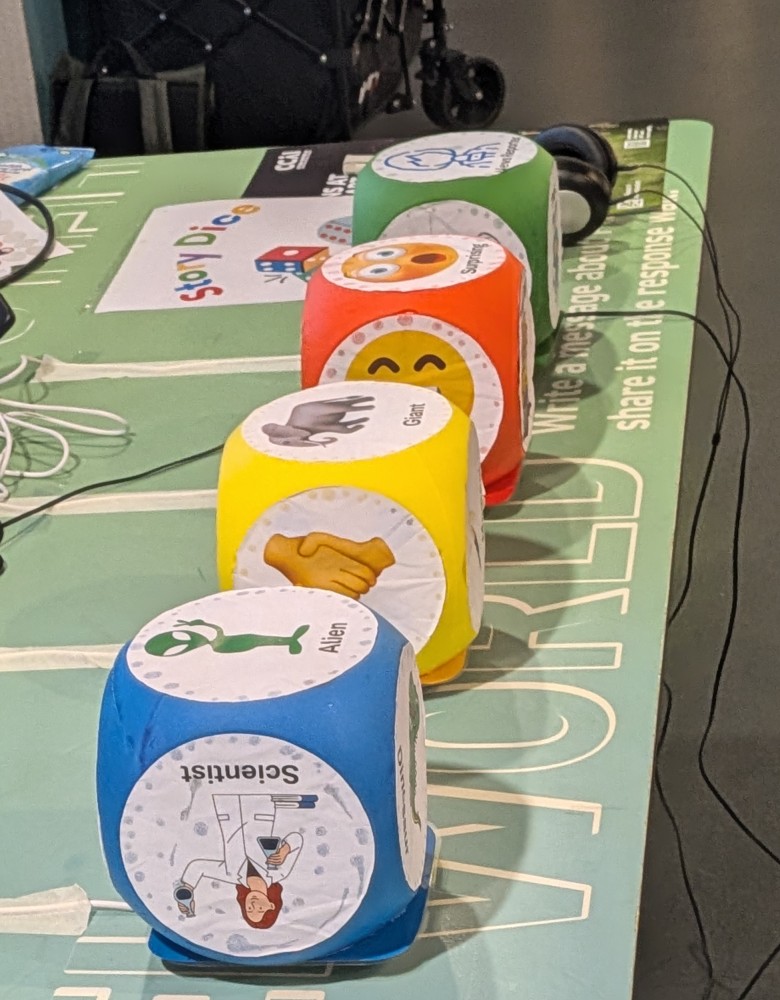
Interactive Exhibits for AI Literacy
Exhibits for a public engagement event at the Life Science Centre



William Imoukhuede, Chris Jackson, Maureen Mwadime, Xixiang Nie, Victoria Owen, Allison Waxberg, +3
Selected Publications
2026
-
Casting the Shadow for Understanding "Reasoning Ghosts"
Xixiang Nie, Xin Shu, Matthew Wood
Jul 2026. Proceedings of the 2026 Conference on Creativity and Cognition. doi:10.1145/3803784.3816871
-
DataMorph: Designing a Metaphorical Data Factory Provotype to Physicalise Invisible Data
Xixiang Nie, Eike Schneiders, Weijia He
Jul 2026. Proceedings of the 2026 Conference on Creativity and Cognition. doi:10.1145/3803784.3816816
-
ShadowAI: Fostering Children's AI Literacy and Critical Understanding of AI Reasoning
Xixiang Nie, Maureen Mwadime, Xin Shu, Matthew Wood
Jul 2026. Proceedings of the 2026 Conference on Creativity and Cognition. doi:10.1145/3803784.3816815
-
Shadows, Doodles and Dice: Three Demos for Inter-generational Interactions around AI Literacy
Dan Jackson, Luís Carvalho, William Imoukhuede, Christopher Jackson, Xixiang Nie, Maureen Mwadime, +3
Jun 2026. Proceedings of the 25th Annual ACM Interaction Design and Children Conference. doi:10.1145/3773077.3813772
-
Somaditation: A Multisensory VR Meditation Experience with a Wearable Glove
Xixiang Nie, Xin Shu
Mar 2026. Proceedings of the Twentieth International Conference on Tangible, Embedded, and Embodied Interaction. doi:10.1145/3731459.3786212


This list includes items automatically linked to authors from OpenAlex.org, and may contain mistakes.