Nine CCAI Researchers to Showcase Citizen-Centred AI Research at UKAIRS 2026
 Ella Walters

Nine doctoral researchers from Northumbria University's UKRI AI Centre for Doctoral Training in Citizen-Centred Artificial Intelligence will contribute to UKAIRS 2026, showcasing research spanning healthcare, education, accessibility, cultural heritage, creative practice and responsible AI.
Nine researchers from the UKRI AI Centre for Doctoral Training in Citizen-Centred Artificial Intelligence (CCAI) will attend the UK AI Research Symposium (UKAIRS) at the University of Edinburgh on 24 and 25 November 2026.
The national symposium brings together AI researchers from across the UK to share emerging research, exchange knowledge and explore opportunities for interdisciplinary collaboration.
CCAI’s participation reflects the diversity of research taking place across the Centre, with doctoral projects examining not only the development and application of artificial intelligence, but also its relationship with people, communities and society.
Showcasing CCAI Research
 Chris Jackson: Making University Experiences More Accessible
Christopher’s research explores how AI-assisted making and participatory approaches could help improve university experiences for students living with energy-limiting conditions. His work considers how technology can support accessibility while enabling students to contribute to meaningful institutional change.
 Faye Doughty: AI and Women’s Health
Faye is investigating how menstrual tracking applications represent menstruation and incorporate AI-driven features. Her research examines the commercial influences shaping these technologies and raises questions about how women’s health experiences are represented within digital products.
 Allison Waxberg: Exploring AI Through Creative Practice
Allison’s research investigates the intersection of clay, artificial intelligence and embodied making. Her work explores how emerging AI technologies interact with hands-on creative processes, raising questions about the relationship between human creativity, material experiences and digital tools.
 Chris Corner: AI and Cultural Heritage
Chris’s research, Voices of the Wear, explores the role of AI in intangible cultural heritage through research-through-design in North East England. His work considers how AI might engage with local cultural knowledge, practices and heritage.
 Joella Lynch: AI and Professional Judgement in Education
Joella’s research examines how teachers make sense of both using and choosing not to use AI in professional practice. Her work explores the relationship between emerging technologies, educators’ decision-making and the importance of retaining professional judgement within educational settings.
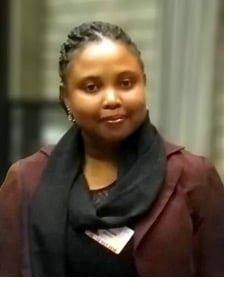 Maureen Mwadime: Accountability in AI-Generated Healthcare Records
Maureen’s research investigates the use of AI-generated clinical documentation in UK general practice, questioning whether clinician sign-off always represents meaningful human oversight. Her work examines how responsibility and accountability are distributed when AI contributes to patient records, including the implications for trust and patient involvement.
 Michał Cholerzyński: Safeguarding Human Expertise in an AI-Driven Society
Michal’s research explores how human expertise and agency can be protected as AI becomes increasingly involved in decision-making. His work introduces the CCALS and REACT-HX frameworks to examine the relationship between automation, authority and the continuing role of human judgement.
 Sylvia Crow: Towards a Translational Framework Between Lived Law and Formal Law
Sylvia and Mr Chris Simmonds’ joint research examines how self-represented litigants in UK employment disputes use generative AI. Based on a qualitative analysis of online discussions, their findings suggest that while AI is distrusted as a source of legal authority, it is valued for organising evidence, structuring narratives and supporting communication. Their work proposes a framework positioning AI as a bridge between lived experiences of legal disputes and formal legal processes, with implications for responsible AI design and access to justice.
 Yve Smith: Exploring Children’s Visions for AI-Enabled Education
Yve’s research explores how children aged 7–11 imagine the future of education in a world increasingly shaped by artificial intelligence. Using creative AI literacy materials and speculative design activities, her work encourages children to explore AI concepts and imagine future learning experiences. Her research highlights the importance of including children’s perspectives in the development of responsible, human-centred educational technologies.
Connecting Research Across Disciplines
Together, these projects demonstrate the interdisciplinary nature of citizen-centred AI research and the importance of bringing human experiences, expertise and perspectives into conversations about technological development.
From challenging assumptions about accountability in healthcare to exploring children’s perspectives on AI in education, CCAI researchers are addressing questions that extend beyond technical AI development.
Participation in UKAIRS provides an opportunity to share these emerging perspectives with the wider UK research community, develop new connections and explore opportunities for future collaboration.
Want to hear more?
Discover the researchers behind CCAI’s work and learn more about the projects shaping the future of citizen-centred artificial intelligence.
Links

People
Publications
-
Exploring children’s visions for an AI-enabled education
Yve Smith
Jun 2026. Proceedings of the 25th Annual ACM Interaction Design and Children Conference. doi:10.1145/3773077.3813780
-
From Automation to Authority: Introducing CCALS and REACT-HX, a Human-Expertise Framework for Safeguarding Agency in AI-Mediated Societies
Michal Cholerzynski, David Hastings
2026. European Society for Socially Embedded Technologies (EUSSETDL). doi:10.48340/ecscw2026_081
-
Early Explorations at the Intersection of Clay, AI, and Embodied Making
Allison Waxberg, Matt Wood
Jul 2026. Proceedings of the 2026 Conference on Creativity and Cognition. doi:10.1145/3803784.3816835